 Sydney Craft Week
Architecture and Material Intelligence with Claire McCaughan
Claire McCaughan founded Custom Mad, her Sydney based architecture and design studio, in 2006. She specialises in highly customised, edgy riffs on sustainable architectural solutions, creating special places for residential, cultural and community clients. Part of the ethos underpinning her work is that architecture can be a powerful tool to elicit kind, creative and conscious behaviours in the world.
What does the phrase 'material intelligence' mean to you?
Custom Mad is almost 10 years old and I’ve been working on updating Sydney’s heritage homes since 2006. So material intelligence means understanding the vitality of older buildings and how to edit them for contemporary life. Practically, this means understanding how materials can be repaired and edited, and how new materials can be repaired in the future. This is so important in our battle to minimise waste in the construction industry.
Has it always been part of your practice and outlook?
I’ve always been interested in finding out how to reuse materials. But practicing architecture is like any kind of practice, you get better at it the more you do it! So I’m better at it now than I was 10 years ago. This means I can better identify how to repair materials - for example - timber is easy to repair, bricks are easy to reuse, and stone can be reshaped into an object with a different use.
Can you give a couple of recent examples of material intelligence in your work, how you developed it and why it was important?
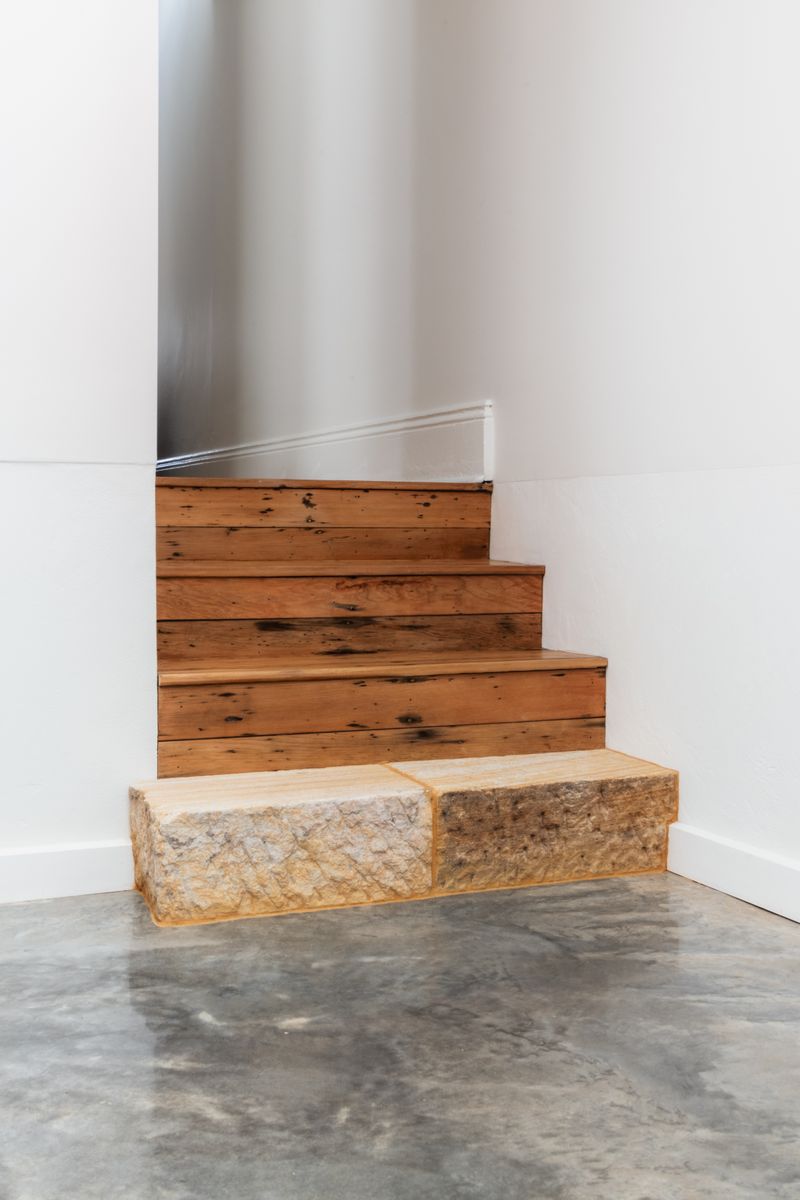
What’s wonderful about this method is our clients love to share the stories about the materials in their home and how they’ve been used differently over time. In Sydney’s Inner West (where we mainly work), a lot of the homes we update have sandstone footings. This means that brick walls rest on huge blocks of sandstone in the ground. We leave them in place if the wall is not being removed. But if we are creating a larger room and we need to deconstruct the wall, we will often take out the sandstone and reuse it somewhere else in the home. And this is where it’s important to understand the vitality of the material - perhaps you could call it - it’s own intelligence. Sydney sandstone is very beautiful, some of it is hard, but mostly it’s soft. So it has had very high performance as a footing for 120 years in the ground, where it has not been exposed to weathering. So thinking about where it should be used next is critical. Sandstone is perfect in the ground, because of course that is where it was extracted from, so we often reuse sandstone as steps, both inside and outside homes.
Does this kind of thinking also have an impact in your non-working life?
Aren’t we all thinking about reusing materials and minimising waste as much as we can?
Is there anything in the Sydney Craft Week program that particularly interests or resonates with you?
Woodfest at the Bulli Showground - what a wonderful community focussed event on caring for materials. I teach in the Masters of Architecture program at UTS and our current studio focus in on stewardship and reciprocity of places and materials, so this event, with a focus on stewardship for wood really chimes with me.